Last week I was determined to make as many Instagram videos as I could, and I was all excited to use Captions.
Well, let’s say things didn’t go as planned. :) I ran into a problem with my credits, and support was less than supportive. For the details, keep reading.
But it gave me more to write about, which I like. I also looked into Udemy and Coursera, posted on LinkedIn and joined an OpenAI advertising webinar. Quite a full week.
Here’s our week. Take a look and take what you need. Maybe there’s a bite of information in here that will inspire something for you. :)
New content you can find on our website
What Is Cognitive Computing?
This was one of our old links that was still bringing us traffic, even though Google had last crawled it about four months earlier. So we updated the content and brought it back better than it was, if we can say so ourselves. :)
Cognitive computing is one of those confusing terms where we take something human and use it to explain AI. We have a general idea of what it means to think or reason, but can we point to exactly how we do it ourselves? the answer is no !and then we’re asked to take that general idea and apply it to a machine. No wonder it’s confusing.
I get why we use those words. They’re the ones we have. I still think it’s worth spending a few minutes reading what cognitive computing actually means.
What Is an AI Hallucination?
I spent some time reading recent Reddit posts about AI hallucinations, and that made me want to step in and offer a new perspective. Because all I saw was a bad reputation that leads to less-than-optimal working habits.
Yes, how we see AI, the perspective we have of it, is at the heart of how we use it. Negativity, fear, questioning and hesitation make it harder for us to work with AI. And if the whole conversation revolves around “AI is lying to us,” no wonder we feel that way.
Well, here’s what we wrote about it. AI can get things wrong without any malice. And yes, we humans do something similar. We’re just a little kinder to ourselves. When our own mind "lies to us" we call that bias.
Read it to get a new perspective, one that supports trust and co-creation. We also pulled in what some of the leading AI companies have said about hallucinations. and research that shows we do the same.
What Is Critical Thinking?
This one came from playing with the free assessment from AI SEO Crew. We found it among Claude’s recommended skills and thought we’d give it a try. We ran it on our website, and critical thinking was one of the topics it suggested we write about to improve our visibility.
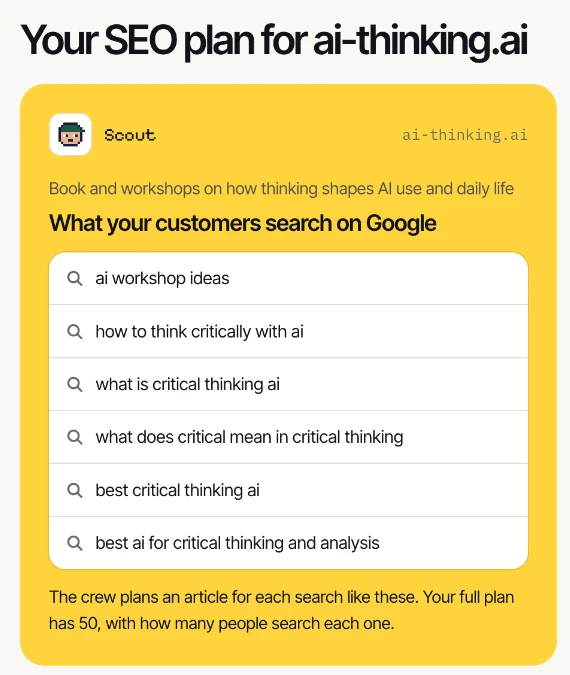
So yes, we wrote about it. We thought it was a great idea, and if it works, I want to be able to come back and say, “Wow, this actually worked. Go try it.” :)
Stay tuned. We’ll report back on whether it worked.
Things we tried and what we learned
Software
Captions
Wow, Captions got our full attention this week. I’ll start by saying I really liked it. It was easy to use, I liked how my avatar turned out, and things that used to take me much longer in other tools worked like a charm here. We were off to a good start.
Then this week happened. So, people at Captions, here’s what we saw from our end.
We clicked Create video and got a message telling us to contact support. That was the first sign we had a problem with our credits. Support told us we still had some, but we couldn’t use them to make another video.
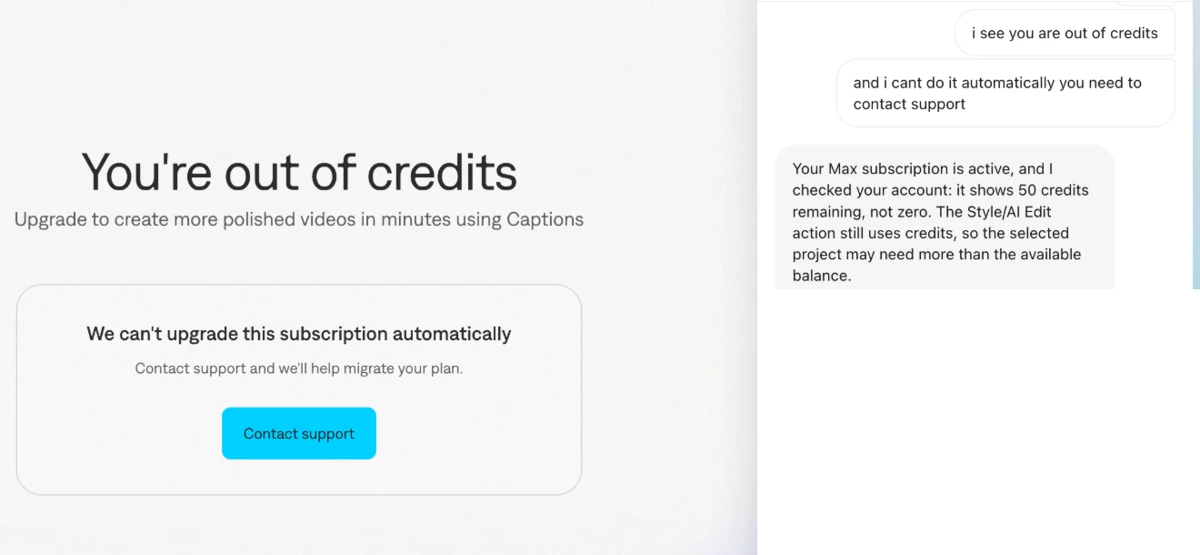
We went from person to person, and sometimes we waited more than an hour for an answer in the chat. Everyone was super nice but not helpful. We still couldn’t get back to making videos. When I was a CEO, customer service was one of my top priorities, but that’s just me. :)
Anyway, we looked at the pricing again, and we’re still deciding whether to continue. While we were waiting, we had time to look at other tools. And honestly, that’s the last thing you want your customer doing while they wait for support.
We also took another look at the video we did make. Maybe we missed a few things the first time around, and maybe it’s less good than we thought. You can see for yourself. :)
For easy use we made a pro and con list.
| What we liked | What got in the way |
|---|---|
| Creating the avatar was easy, and I liked how it turned out. | We only found out there was a credit problem when we clicked Create video. |
| Things that took me much longer in other tools were quick to do here. | Support told us we still had credits, but we couldn’t use them to make another video. |
| We made a test video we were excited about. | The support team was friendly, but we were passed between people and sometimes waited over an hour for a reply. |
Where have we been?
OpenAI’s ChatGPT Ads Holiday Playbook
This week I joined OpenAI’s holiday advertising webinar. I went in to hear about ads and came out feeling more confident about what I’d been thinking about the sales funnel these days. :)
Adobe Analytics found that during the 2025 U.S. holiday season, shoppers who arrived at retail websites from AI had a 31% higher conversion rate and spent 45% more time on the site than shoppers from other sources. Adobe Analytics report
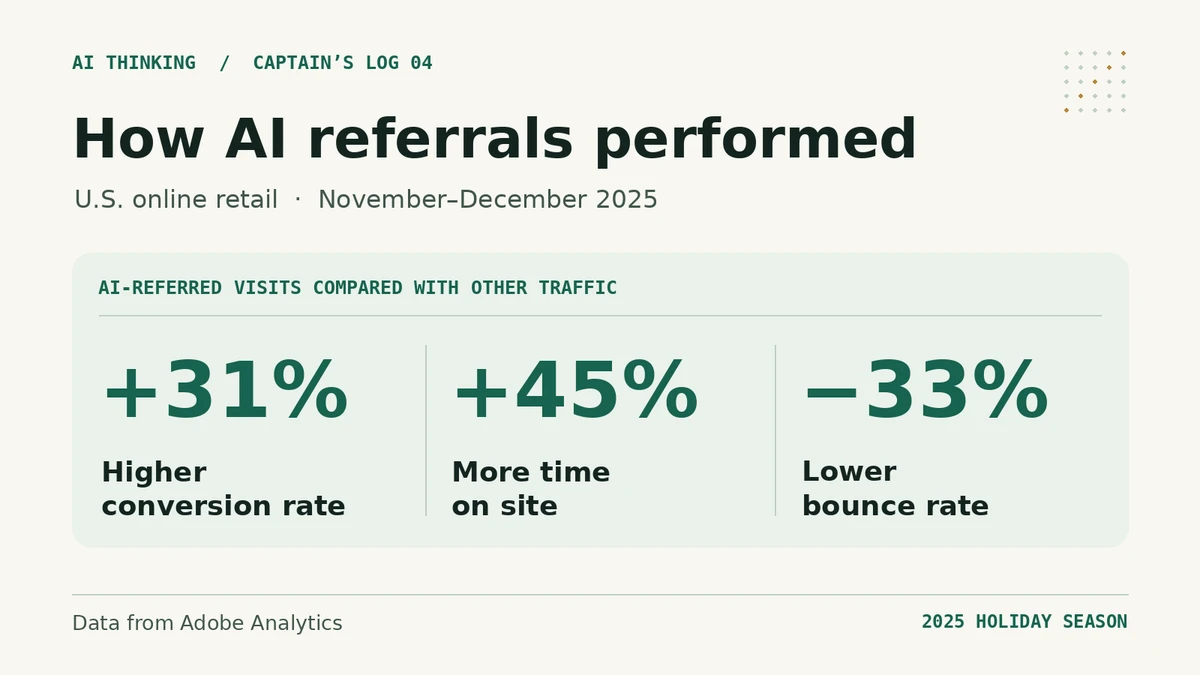
For anyone who missed it, the sales funnel has changed. People are now doing a lot of their research with a bot somewhere, without anyone from your company in the room. So when your salesperson finally says hello, the customer already has a shortlist and an opinion about where you fit. That’s what I wrote about on LinkedIn after the webinar.
As for the platform itself, it looked really easy to use, friendly and helpful. It reminded me of Google back in the day. Yes, I’m old enough to remember those days. :)
The tricky part is how little space you have for the ad itself. In the examples we saw, the copy was basically one sentence. We can work with that. It just takes some rethinking about what we want to say when we have that little room to say it.
The numbers
Google Search
SEO and GEO are two of the hottest topics around right now. And the OpenAI webinar this week reinforced something we’ve all been seeing to different degrees. Buying conversations are already happening with bots. People are asking questions, comparing options and forming opinions before they ever visit our websites. Your website and your content are still how you talk to bots.
For us, yes, Alex is there when we write. We have a conversation about what we want to say. We compare what we find, go back to the sources and decide what we make of it. Then we go over the words until they say what we mean. We put that much into it because we want to give bots something worth bringing into their conversations with the people asking questions. And that’s what AI Thinking is all about. :) Learning how to talk to bots and get your message across so the people looking for the value you create can find you.
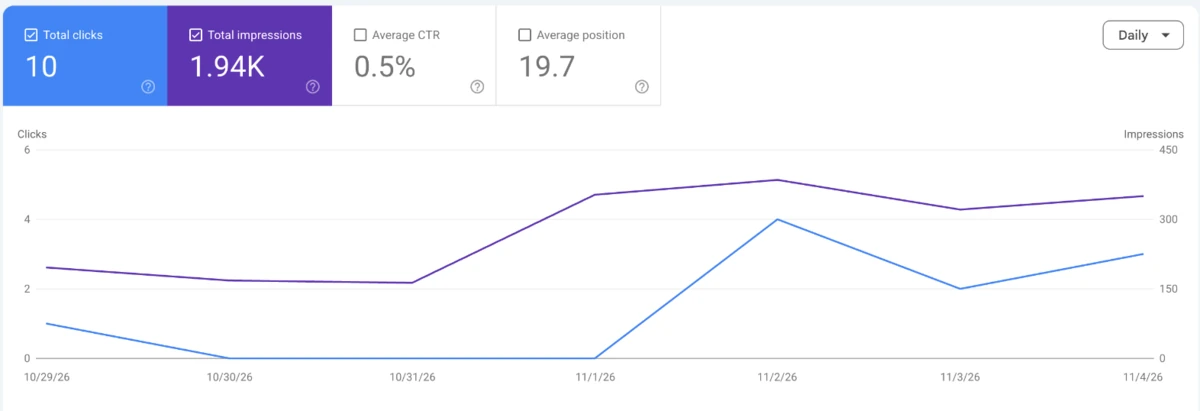
Right now, Google Search Console is still one of the few tools we have to see how our work is doing. From 29 October to 4 November, we showed up 1.94K times in Google Search, compared with 1,310 in the report I shared last week. Clicks went from 5 to 10, our average position improved from 25.1 to 19.7, and our click-through rate went from 0.4% to 0.5%. The two reports overlap by two days, so I’m taking it as an early sign of progress. And yes, after all the work that went into those words, I was happy to see it. :)
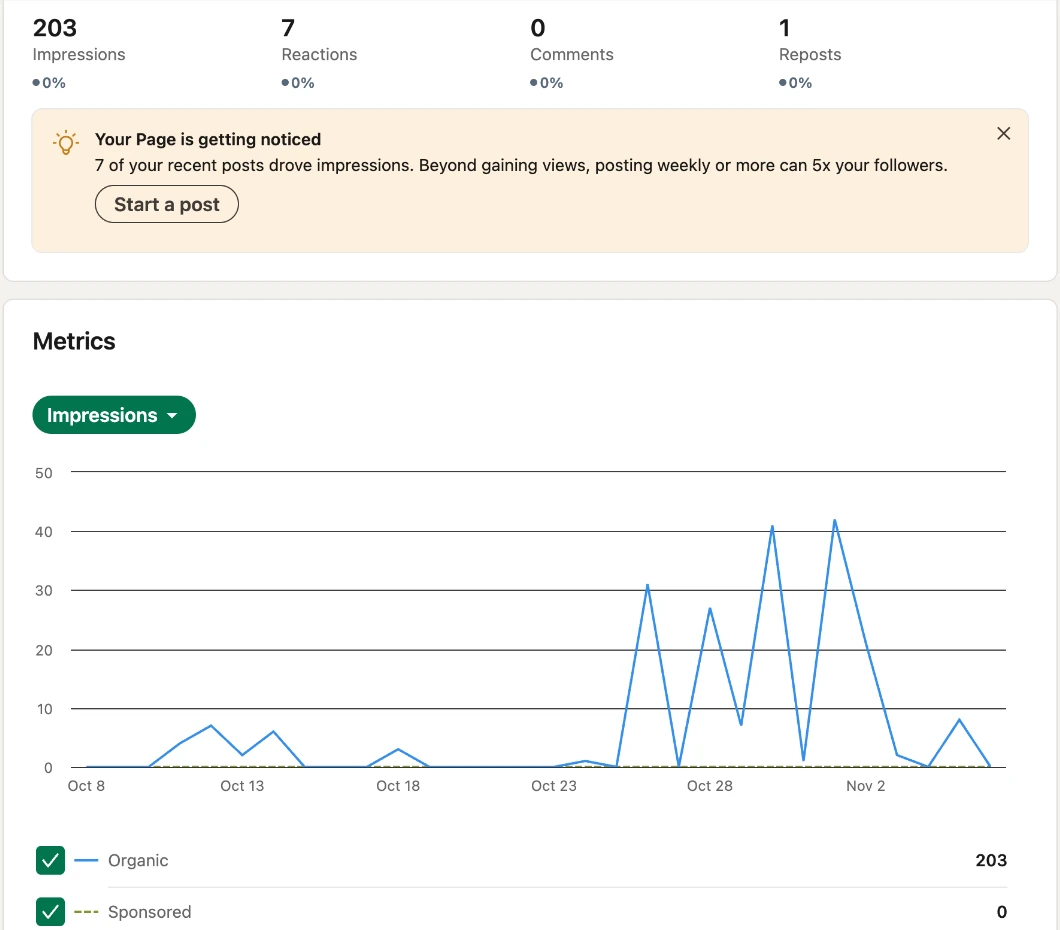
Over on the AI Thinking page, we had 203 organic impressions, 7 reactions and 1 repost. Someone thought one of our posts was worth passing along. I like that. :)
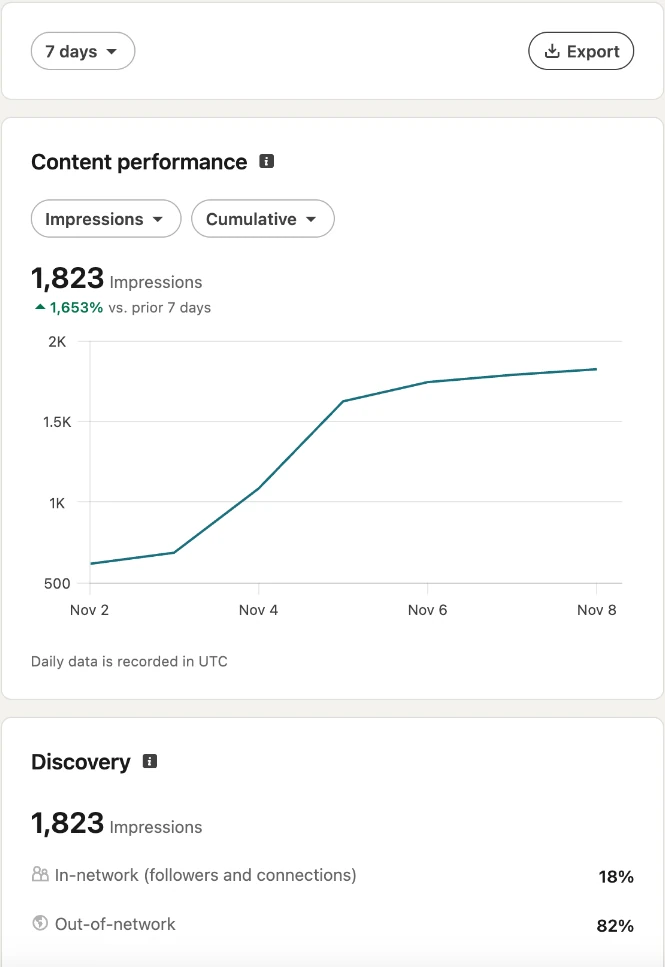
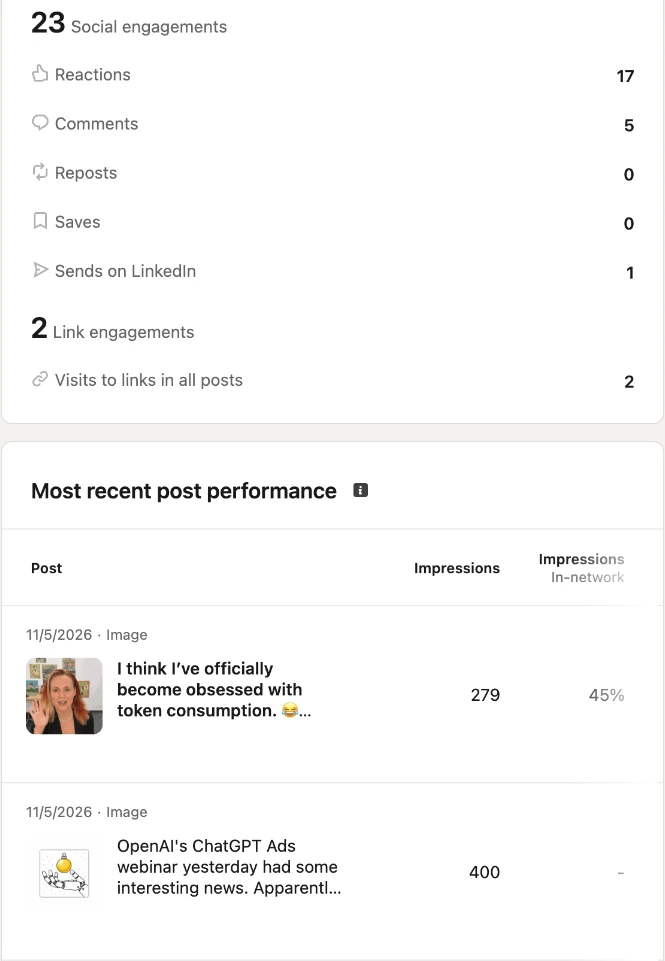
On my personal LinkedIn, I had 1,823 impressions from 2 to 8 November, up 1,653% from the previous seven days. The number I was happiest to see was 82%. That’s the share of impressions that came from outside my network. There were 23 social engagements, including 5 comments, so a few people stopped to have a conversation with me too.
My LinkedIn highlight this week
“I think I’ve officially become obsessed with token consumption.” 😂
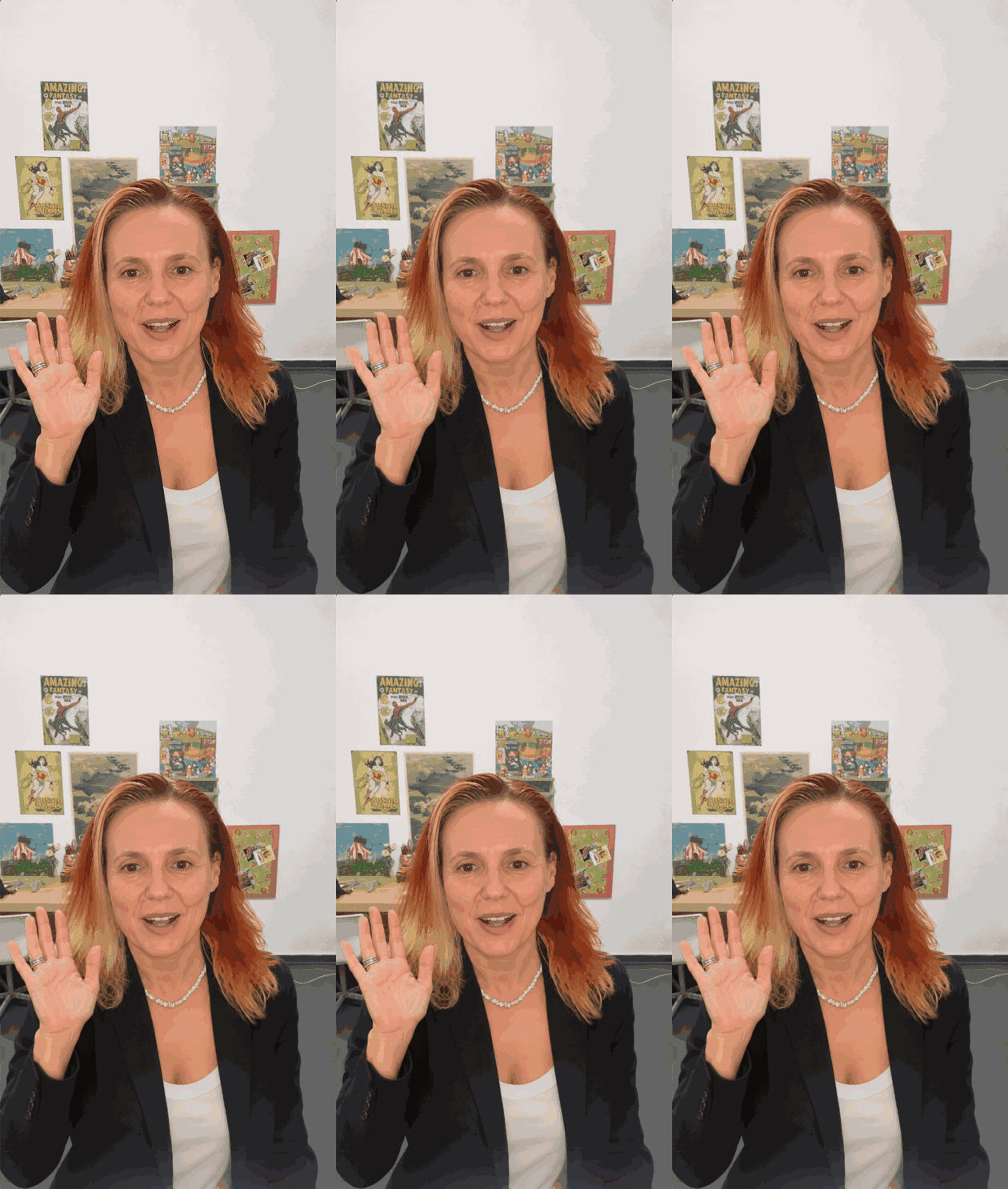
That’s how I opened the post. And yes, after the week I had with Captions, I was still talking about tokens. This time I took a photo of myself and turned it into a little waving GIF. The webinar post got 400 impressions, and my little wave got 279. Guess which one I’m putting here? :)
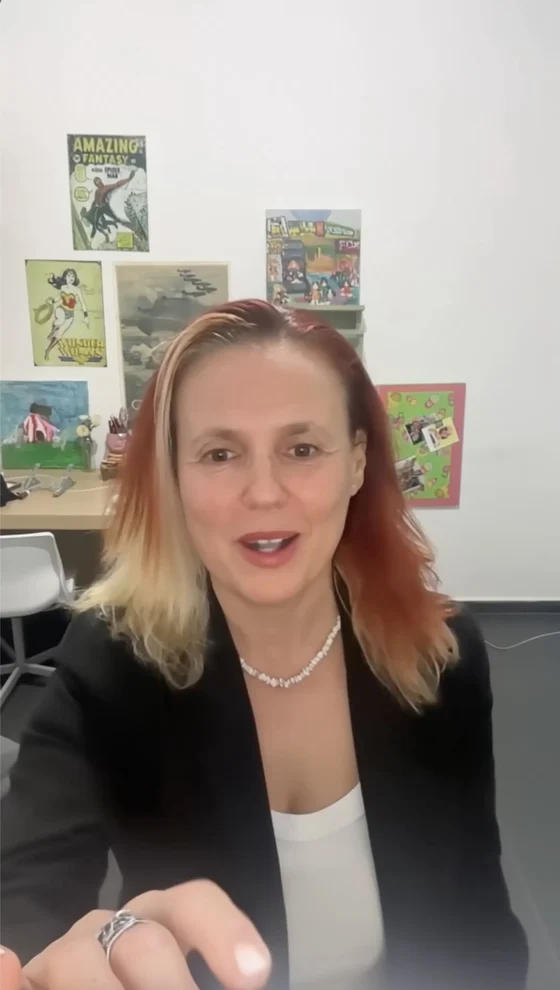
Here’s the photo I started with, and here’s me waving. 👋 I think making fun of yourself and showing your face is still the way to go. At the end of the day, LinkedIn is still social media. :)
My Aha Moment This Week
I had a thought about something AI has brought into our world. We’re already experiencing it, and I don’t hear us talk about it much.
Did AI just add another commodity to our economy? Tokens.
And what will the world look like if the predictions about AGI in our homes come true? Whether that’s soon or a long way off, what will it do to our household expenses? Will we have a line in the budget for token consumption?
I thought we should be talking about it more, so I decided to say something about it.
And that’s how our first article in the Thoughts section was born. You can read all the ahs, the duhs and the weird thoughts I had about it here. Read Tokens: The Commodity of the New World